
Your child has shown interest in squash, and now comes one of the most important decisions in their athletic journey: selecting the right coach. The coach you choose will shape not only your child’s technical development but also their relationship with the sport itself. A great coach can instill a lifelong love of squash, while the wrong fit can turn a promising young athlete away from the game entirely.
Unlike team sports where coaches are assigned, squash offers families the opportunity – and responsibility – to handpick their child’s instructor. This choice becomes even more critical when you consider that squash coaching often involves one-on-one instruction, creating an intimate learning environment where personality fit and teaching style matter enormously.
The good news? With the right questions and evaluation criteria, you can identify a coach who will nurture your child’s potential while keeping the sport enjoyable and developmentally appropriate.

Understanding What Makes a Great Junior Squash Coach
Beyond Playing Ability: Teaching Skills Matter Most
A common misconception among parents is that the best players automatically make the best coaches, especially for children. While playing experience certainly provides valuable insight, coaching juniors requires a completely different skill set.
What truly matters for junior coaching:
Communication Skills: Can the coach explain complex movements in simple, age-appropriate language? Do they use positive reinforcement and encouragement rather than criticism?
Patience and Adaptability: Every child learns differently and at their own pace. Great junior coaches adjust their teaching methods based on individual learning styles and developmental stages.
Understanding of Child Development: Effective junior coaches know that an 8-year-old has different physical, emotional, and cognitive capabilities than a 14-year-old. They structure lessons accordingly.
Safety Consciousness: Young players are still developing spatial awareness and risk assessment. Quality coaches prioritize safety education alongside technical instruction.
The Importance of Proper Certification
Professional coaching certification indicates that an instructor has invested in learning proper teaching methodology, safety protocols, and sport-specific knowledge. In the United States, look for:
US Squash Certification: The gold standard for American squash coaching, with levels ranging from Level 1 (introductory) to Level 5 (master coach). Level 3 and above indicate serious professional development and advanced teaching capability.
Continuing Education: The best coaches regularly attend clinics, workshops, and certification updates to stay current with teaching methods and sport development.
First Aid/CPR Certification: While not always required, this shows a coach’s commitment to student safety and preparedness.
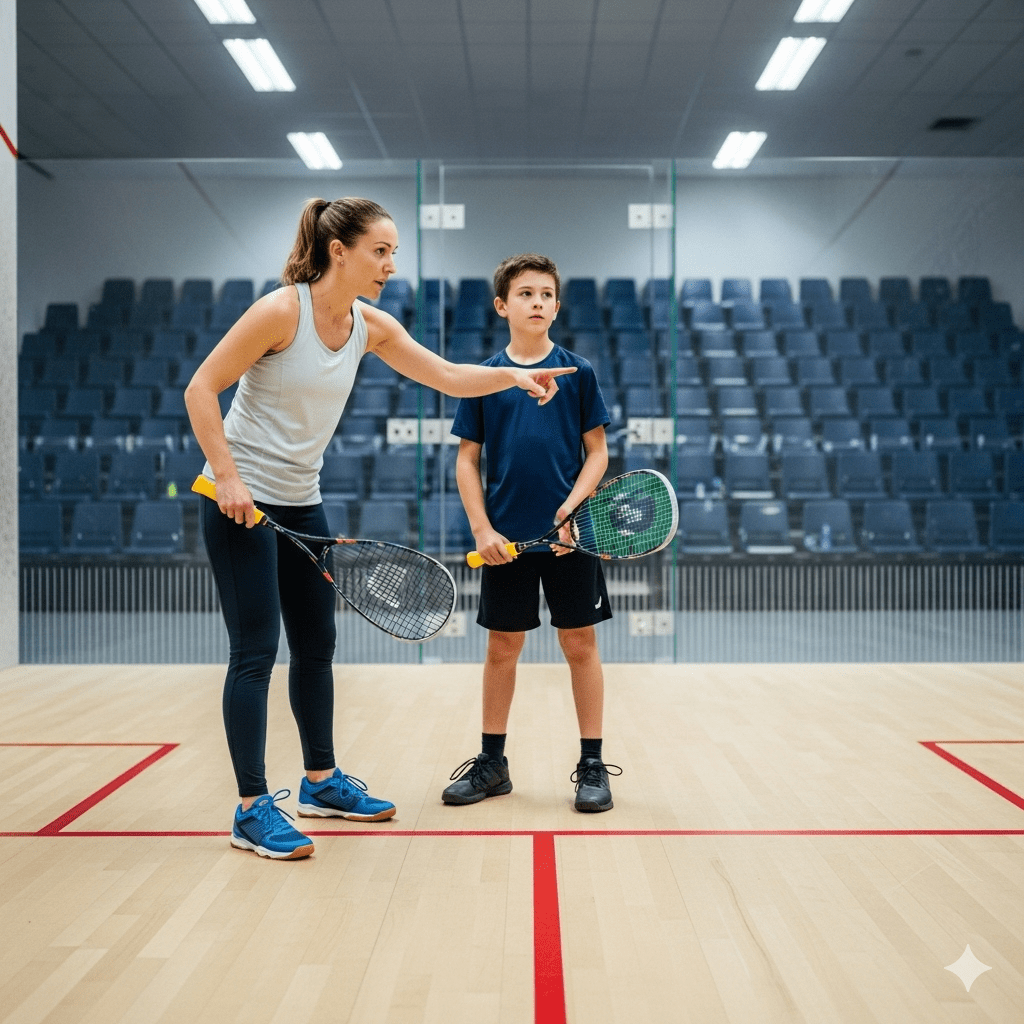
Essential Questions to Ask Potential Coaches
About Their Coaching Background
“How long have you been coaching, and what’s your experience with junior players?”
Look for coaches with several years of experience, particularly with children in your child’s age range. Someone who primarily coaches adults may struggle with the patience and communication style needed for young players.
“What coaching certifications do you hold?”
Don’t be shy about asking for specific credentials. Serious professional coaches are proud of their certifications and ongoing education.
“Can you provide references from other parents?”
Quality coaches should readily provide contact information for current or former student families. Speaking with other parents gives invaluable insight into communication style, reliability, and results.
About Their Teaching Philosophy
“How do you typically structure lessons for beginners?”
Listen for responses that emphasize fun, safety, and gradual skill building. Be cautious of coaches who immediately discuss advanced techniques or competitive goals for beginners.
“What’s your approach to keeping young players motivated and engaged?”
Great answers might include: using games to teach skills, celebrating small improvements, adapting to different personality types, and maintaining variety in lessons.
“How do you handle students who are struggling or feeling frustrated?”
The response should demonstrate patience, problem-solving abilities, and strategies for rebuilding confidence.
“What role do you see parents playing in a child’s squash development?”
Look for coaches who value parent communication and understand that family support enhances a child’s progress.
About Practical Considerations
“What are your lesson rates, and what do they include?”
Understand exactly what you’re paying for: lesson length, equipment provided, court fees included or separate, makeup lesson policies.
“Where do you teach, and what facilities are available?”
Multiple court facilities offer flexibility and demonstrate the coach’s established relationships with quality venues. Ask about equipment availability, changing facilities, and parking.
“What’s your scheduling flexibility and cancellation policy?”
Life with children is unpredictable. Coaches who understand this and offer reasonable makeup policies tend to work better with families long-term.
“Do you offer trial lessons?”
Many experienced coaches offer introductory lessons to ensure mutual fit. This demonstrates confidence in their teaching and commitment to finding appropriate matches.
Red Flags to Watch For
Warning Signs During Initial Conversations
Reluctance to Answer Questions: Professional coaches welcome questions about their background, methods, and policies. Evasiveness or irritation suggests potential problems.
Immediate Focus on Competition: While some children may have competitive aspirations, coaches who immediately discuss tournaments and rankings before assessing a child’s interest and ability may have misplaced priorities.
Inflexible Scheduling or Policies: Coaches who won’t accommodate reasonable scheduling needs or have punitive cancellation policies may not understand the realities of family life.
Guaranteeing Rapid Results: Be skeptical of promises about quick improvement or specific timelines for skill development. Quality coaches understand that progress varies by individual.
During Trial Lessons or Initial Observations
Impatience with Mistakes: Young players will make errors – constantly. Watch how potential coaches respond to struggles and setbacks.
Inappropriate Communication: Coaches should speak to children respectfully, using encouraging language even when providing correction.
Safety Oversights: Any coach who doesn’t prioritize eye protection, proper spacing, or court awareness should be eliminated immediately.
Rigid Teaching Style: If a coach can’t adapt their approach when a child isn’t understanding or responding well, they may not be suitable for junior instruction.
Evaluating Teaching Style and Personality Fit
Observing Coach-Student Interactions
If possible, watch potential coaches work with other students, particularly children similar to your own. Pay attention to:
Energy and Enthusiasm: Do they seem genuinely excited about teaching? Is their energy level appropriate for motivating young players?
Communication Clarity: Can you understand their instructions? Are they speaking at an appropriate level for the child’s age?
Patience Level: How do they respond when students struggle with concepts or need multiple repetitions?
Positive Reinforcement: Do they celebrate successes and effort, not just perfect execution?
Matching Coach Personality to Your Child
For Shy or Anxious Children: Look for coaches with gentle, encouraging demeanors who build confidence gradually.
For High-Energy Kids: Coaches who can channel enthusiasm productively while maintaining structure work well.
For Perfectionist Children: Coaches who emphasize process over results and help manage frustration are ideal.
For Highly Competitive Kids: Balance is key – coaches who can nurture competitiveness while maintaining perspective on development.
Understanding Different Coaching Approaches
Individual vs. Group Instruction
Private Lessons Benefits:
- Completely customized instruction
- Faster identification and correction of technical issues
- Builds confidence in nervous beginners
- Flexible pacing based on individual progress
Group Lessons Benefits:
- Social interaction and peer learning
- More cost-effective for families
- Exposure to different playing styles
- Built-in motivation from friendly competition
Semi-Private Options: Many coaches offer lessons shared between two students, combining personalized attention with social benefits.
Developmental vs. Competitive Focus
Developmental Approach:
- Emphasizes long-term skill building
- Focuses on movement patterns and coordination
- Prioritizes enjoyment and engagement
- Introduces competition gradually
Competitive Approach:
- More intensive technical instruction
- Earlier introduction to match play and tournaments
- Higher expectations for practice and commitment
- Focus on results and rankings
For most young beginners, a developmental approach provides the best foundation, even for children who may eventually pursue competitive squash.
Making the Final Decision
The Trial Lesson: Your Best Evaluation Tool
Most professional coaches offer trial lessons specifically because fit matters so much in one-on-one instruction. Use this opportunity to evaluate:
Your Child’s Response: Do they seem comfortable and engaged? Are they asking questions or showing enthusiasm?
Communication Style: Does the coach explain things clearly at your child’s level? Do their corrections help or confuse?
Lesson Structure: Does the session flow logically with appropriate warm-up, instruction, practice, and cool-down?
Safety Emphasis: Is eye protection required? Are court rules explained clearly?
Post-Lesson Discussion: Does the coach provide thoughtful feedback about your child’s potential and next steps?
Questions to Ask Your Child After the Trial
- “What did you think of the coach?”
- “Did you understand what they were teaching you?”
- “Would you want to take another lesson with them?”
- “What was your favorite part of the lesson?”
- “Did anything make you uncomfortable or confused?”
Children’s instincts about coaches are often remarkably accurate. If your child doesn’t connect with an instructor, consider other options regardless of credentials.
Trusting Your Parental Instincts
You know your child better than anyone. If something feels off about a coach’s communication style, teaching methods, or personality, trust that feeling. The right coach should:
- Make both you and your child feel comfortable and confident
- Communicate clearly about progress and expectations
- Demonstrate genuine care for your child’s development
- Be someone you’d trust with your child’s athletic and personal growth
Building a Successful Coach-Family Relationship
Setting Clear Expectations
Once you’ve selected a coach, establish clear communication about:
Goals and Timeline: What do you hope your child will achieve, and over what timeframe?
Lesson Frequency: How often will lessons occur, and how consistent can your schedule be?
Practice Expectations: What, if any, practice is expected between lessons?
Communication Preferences: How and when will the coach update you on progress?
Supporting Your Child’s Development
Do:
- Communicate openly with the coach about your child’s needs and concerns
- Support consistent lesson attendance and punctuality
- Celebrate effort and improvement, not just results
- Trust the coach’s expertise while staying involved
Don’t:
- Undermine the coach’s instruction with conflicting advice
- Put pressure on your child for rapid improvement
- Compare your child’s progress to others
- Skip lessons frequently without good reason
When to Consider a Coaching Change
Even with careful selection, sometimes coaching relationships don’t work out long-term. Consider a change if:
- Your child consistently dreads lessons or expresses discomfort
- Progress stagnates over several months with no clear explanation
- Communication with the coach becomes difficult or contentious
- The coach’s approach no longer fits your child’s developmental needs
- Life circumstances require different scheduling or location needs
Finding Quality Coaching in Your Area
Leveraging Local Resources
Club Professionals: Established squash clubs often employ certified professionals with extensive junior experience.
University Programs: Many colleges with squash teams offer instruction through their coaches or graduate assistants.
Squash Associations: Local and regional squash organizations can provide referrals to certified coaches.
Word of Mouth: Other squash parents are excellent resources for coach recommendations and honest feedback.
Evaluating Coaching Programs vs. Individual Instructors
Established Programs: Often provide structured curricula, multiple coach options, and organized group activities.
Individual Coaches: May offer more flexibility, personalized attention, and potentially stronger individual relationships.
Hybrid Approaches: Some coaches offer both private instruction and group clinics, providing variety and social interaction.
Geographic and Logistical Considerations
Location Accessibility: Consider drive time, parking availability, and convenience for regular lessons.
Facility Quality: Multiple courts, proper lighting, temperature control, and safety features matter for optimal learning.
Equipment Availability: Coaches who provide junior-sized racquets and safety equipment eliminate barriers for families just starting out.
Investment Considerations and Value
Understanding Coaching Costs
Quality squash coaching represents a significant investment, but the right coach provides value far beyond technical instruction:
Skill Development: Proper technique learned early prevents bad habits and future correction needs.
Safety Education: Professional instruction reduces injury risk through proper technique and court awareness.
Character Development: Great coaches teach sportsmanship, perseverance, and respect alongside athletic skills.
Long-term Enjoyment: Positive early experiences create lifelong appreciation for the sport.
Maximizing Your Investment
Consistency: Regular lessons with the same coach build momentum and relationships.
Communication: Stay involved and informed about your child’s progress and areas for improvement.
Patience: Allow time for skills to develop naturally rather than expecting immediate results.
Supplemental Practice: When appropriate and safe, encourage practice that reinforces lesson content.
The Long-Term Perspective
Growing with Your Coach
The ideal coaching relationship evolves as your child develops. A great junior coach should:
- Adapt teaching methods as your child matures
- Adjust goals and expectations based on changing interests and abilities
- Provide guidance about competitive opportunities when appropriate
- Maintain focus on enjoyment and personal development throughout
Building Foundation for Future Success
Whether your child pursues competitive squash or plays recreationally, the right coach establishes fundamentals that last a lifetime:
Technical Skills: Proper stroke mechanics and movement patterns Tactical Understanding: Court awareness and strategic thinking Physical Fitness: Coordination, agility, and cardiovascular health Mental Skills: Focus, perseverance, and emotional regulation Social Skills: Respect, sportsmanship, and communication
Making Your Choice
Selecting your child’s first squash coach is one of the most important decisions in their athletic development. The right instructor becomes far more than a technical teacher – they become a mentor, motivator, and positive influence who can shape your child’s relationship with sport and physical activity for years to come.
Take time to ask the right questions, observe teaching styles, and trust both your instincts and your child’s responses. Remember that credentials matter, but personality fit and communication style often matter more for long-term success.
The investment in quality coaching pays dividends far beyond improved squash skills. The confidence, perseverance, and joy that come from working with the right instructor create benefits that extend into all areas of your child’s life.
Ready to Find Your Child’s Perfect Coach?
When searching for exceptional junior squash coaching, look for instructors who combine:
- Advanced professional certification (US Squash Level 3 or higher)
- Extensive experience with young players across different skill levels
- Multiple facility access for scheduling convenience
- Proven track record of student development and college placement success
- Flexible lesson options including private instruction and group clinics
The right coach makes all the difference in your child’s squash journey. From that first trial lesson through years of development, quality instruction builds not just better players, but confident, resilient young people who carry the lessons learned on the court into every aspect of their lives.
Start Your Search Today
- Free trial lessons available to ensure the perfect coach-student fit
- US Squash Level 3 Certified instruction with 15+ years of junior development expertise
- Multiple premium facilities throughout the Boston region
- Flexible scheduling options: Private lessons ($125/45 minutes, can be shared) and group clinics ($90/90 minutes)
- Proven college placement results at top academic and athletic institutions
Contact Gary Gargan to discuss your child’s squash coaching needs. Visit jumbosquash.com or reach out directly at gary.gargan@tufts.edu to schedule a complimentary consultation and trial lesson.
The right coach doesn’t just teach squash – they inspire a lifelong love of the game.
 Jumbo Squash Academy
Leave a comment